





Green Hydrogen and Serbia’s Energy Transition: Belgrade to Host the International H2 Conference 2026
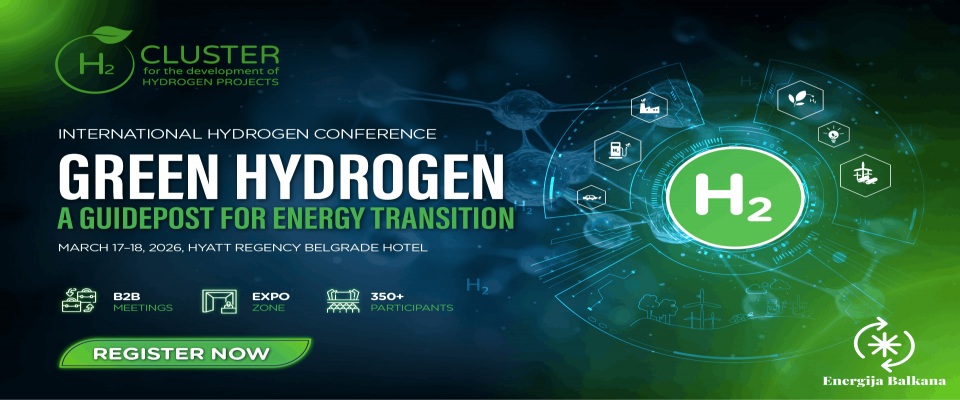
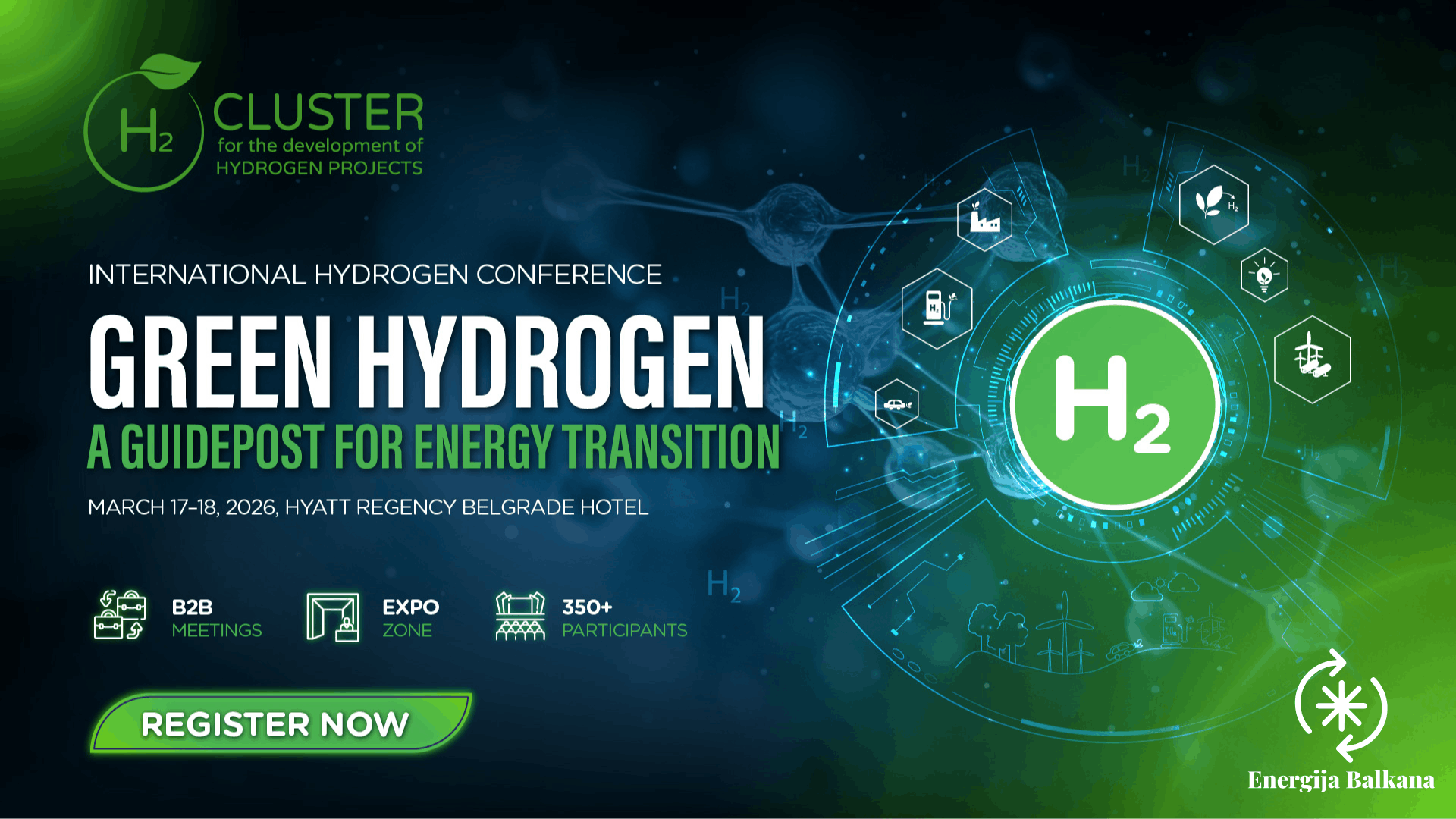
Belgrade, 17–18 March 2026 – At a time when Europe’s energy transition is accelerating and the need for a stable, secure and sustainable energy system is becoming one of the key challenges of modern society, Belgrade will host the International H2 Conference 2026, one of the most important regional events dedicated to green hydrogen and the future of energy.
The conference will take place at the Hyatt Regency Belgrade and will bring together key stakeholders of the energy transition from Serbia, the region and across Europe.
An International Platform for Energy Policy, Industry and Investment
The International H2 Conference 2026 – Green Hydrogen as a Roadmap for Energy Transition is organized by the Hydrogen Projects Development Cluster (H2 Cluster) and the energy portal Energija Balkana.
The event is designed as a professional and business-oriented platform connecting power utilities and energy companies, industry and energy-intensive sectors, investors and financial institutions, regulators and policy makers, research organizations and international institutions.
The goal of the conference is to connect energy policy, technology and capital through dialogue based on real projects and implementable solutions.
Green Hydrogen as a Response to Power System Challenges
Over the past decade, Serbia has made significant progress in the development of renewable energy sources, particularly wind and solar power. However, the growth of renewables simultaneously raises questions related to power system stability, balancing electricity generation and consumption, and long-term energy storage.
The Role of Green Hydrogen in the Energy Transition
In this context, green hydrogen gains a strategic role as a technology that connects renewable energy sources with a flexible, resilient and reliable energy system, enabling the decarbonization of industry, transport and the energy sector.
Focus on Projects and Implementation, Not Only Strategies
H2 Conference 2026 places special emphasis on practical solutions and real-world projects, rather than focusing exclusively on strategic documents and long-term plans.
Key Conference Topics
Through high-level panel discussions, interviews with decision-makers and case studies, the conference will address the following topics:
-
how power utilities plan and implement the energy transition,
-
development of large-scale hydrogen projects and H₂ valleys,
-
infrastructure challenges related to hydrogen storage and transport,
-
achieving a competitive price for green hydrogen,
-
ways in which industry, investors and end users are already applying hydrogen in operational systems.
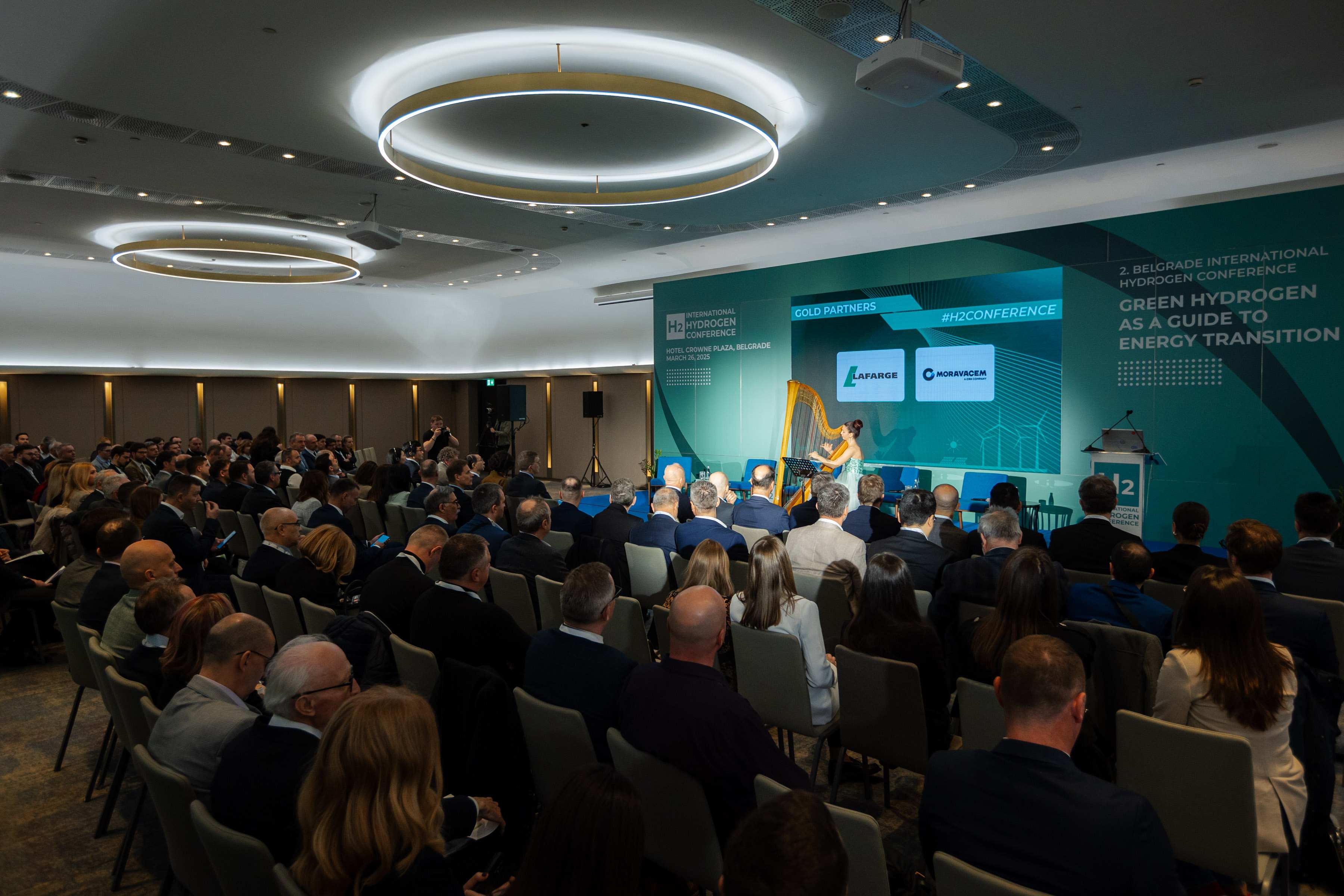 H2 Conference 2025, Crowne Plaza Belgrade
Belgrade as a Regional Meeting Point for Future Energy Solutions
The participation of representatives of national power utilities, international institutions, industrial leaders and investors adds particular value to the conference. They will discuss how the energy transition is being implemented in practice – from planning and financing to construction and day-to-day operation of energy systems.
The conclusions of the conference will represent an important contribution to the development of the hydrogen ecosystem in Serbia, including the preparation of pilot projects, development of professional capacities, infrastructure planning, and alignment with European standards and initiatives.
H2 Conference 2026 – An Opportunity for Serbia to Actively Shape Its Energy Future
At a time when hydrogen is moving from the concept phase to real-world implementation, H2 Conference 2026 represents an opportunity for Serbia to actively participate in shaping a sustainable, flexible and technologically advanced energy system.
More information about the event is available at:
https://www.h2cluster.rs/
This email address is being protected from spambots. You need JavaScript enabled to view it.
The National Biomass Association – SERBIO provides institutional support to H2 Conference 2026 and actively participates in its organization, with the aim of strengthening dialogue between industry, the energy sector and policy makers, and promoting sustainable, domestic and systemic energy solutions.